MOOD IN CASE / GLITTER-LOOK DETAILS
Can a Photo Tell You If a Glitter-Look Phone Case Sparkles?
Published November 14, 2026 · Mood In Case editorial
A still photo can show where the bright details sit, but it cannot tell you whether they change as the case moves. Compare photos or an unfiltered clip of the exact color in steady light. If you want a particular finish or surface feel, ask Mood In Case Customer Care before you order.
See two exact catalog options →Use the still photo to read the pattern
First look at the design from arm’s length. Decide whether the bright details are confined to certain parts of the artwork or spread across the back. That tells you how noticeable the design might be in an ordinary glance. It is useful even if you never find a video. Look at the edges of the bright areas too: tiny points inside a larger spot read differently from broad bands of color.
A still photo records one moment. A bright point can be part of the artwork, a reflection from the surface, or something that catches the light. Several of those effects can look alike in a single frame. The name of the design does not settle which one you are looking at. Read the listing for any specific finish description, and leave the question open if the detail that matters to you is missing.
Also look at the surroundings in the picture. A lamp, a pale tabletop or a nearby window can produce highlights that do not belong to the case. If a bright shape extends across both the case and another object, treat it as a clue about the lighting rather than a feature of the design. You can still judge the pattern placement from the parts of the picture that are clear.
Compare two ways a case can look bright in a photo
The Glitter Leopard Print case in Coffee shows dark leopard spots on a brown-looking background. In the catalog photo, many of the lighter points sit inside those spots. The pattern stays easy to recognize because there is a darker shape around the light details. Choose it if you like where the details are placed, even if how strongly they catch the light is still an open question.
The Iridescent Abalone Ocean Shell case in Transparent shows larger swirls of green, blue and violet across much of the back. The catalog photo shows the design on two phones at different positions. It is a useful view of the color and pattern, but it does not follow one case through a single movement in constant lighting. The picture alone cannot show how much the finish changes when you tilt it.
Both links below select iPhone 17 Pro and were listed at $9.90 USD when checked. The Coffee and Transparent labels identify the options in the selector. The photos are representative; the handset pictured need not be the exact model selected. Use the selector to check fit, and the picture to judge the design you can see.
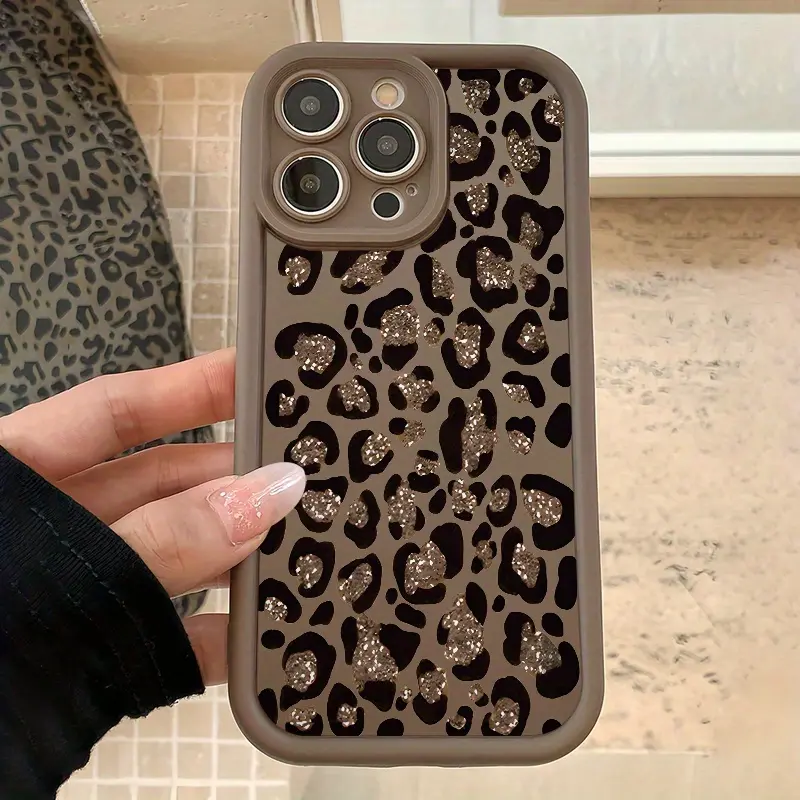
Representative catalog photograph. Check the selected model and color on the product page.
Review Glitter Leopard Print exact option →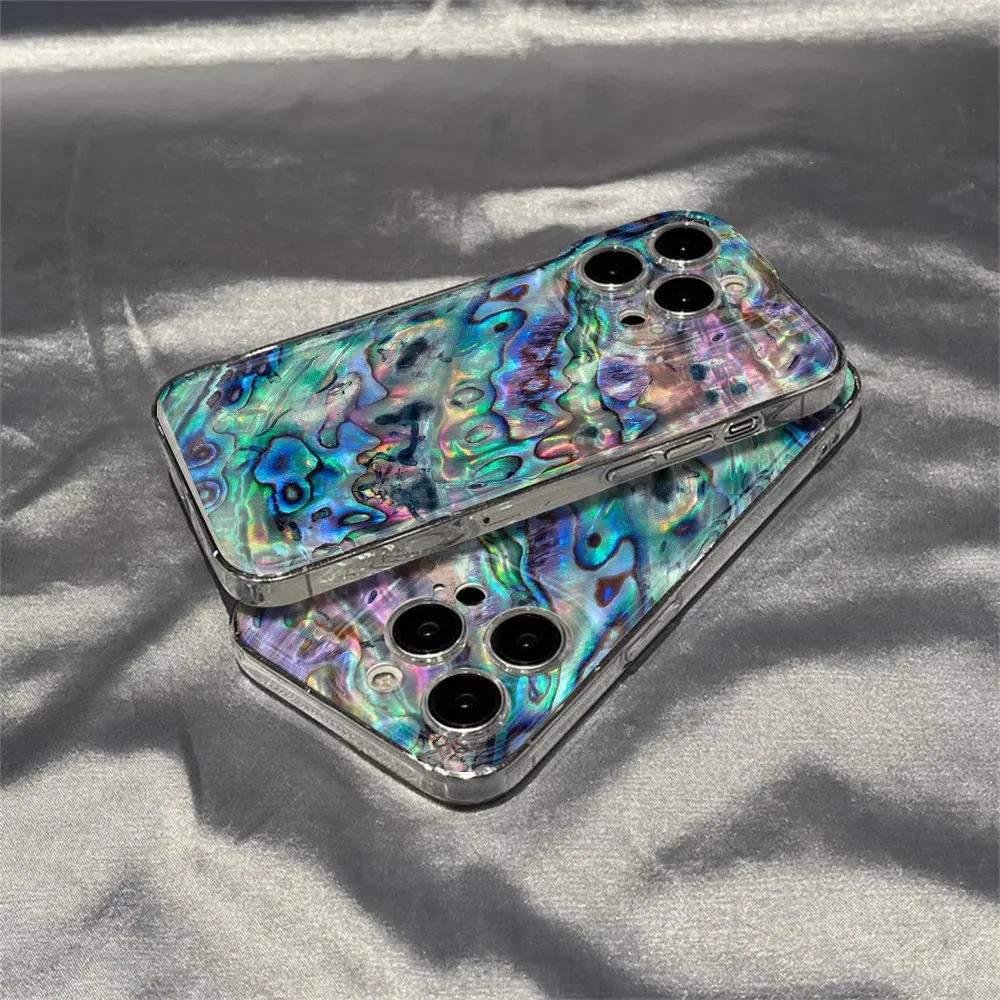
Representative catalog photograph. Check the selected model and color on the product page.
Review Iridescent Abalone Ocean Shell exact option →Ask for one steady-light view if the effect matters
If you want sparkle that moves, ask for a short view of the same case slowly tilted near a window or under one steady lamp. Watch a fixed detail, such as one leopard spot. Does a bright point appear and disappear while the outline of the spot stays in place? For a shell look, follow one patch of color instead. Watch whether the patch changes as the case turns, or whether the whole frame simply gets brighter.
Comparing a studio image with a darker lifestyle shot is less useful. Both the camera and the light might have changed. A continuous view of the same option gives you a better reference. If the only material available is a still image, decide based on the layout and colors you can see. Leave the strength of any moving effect unconfirmed.
A finish can also look smooth in a picture while its actual feel remains unclear. If you care about whether the decorative details are raised, ask about that separately. Include the full phone model and the link with the selected color, then name the part you want checked. That makes it easier for Customer Care to answer about the right option.
If the case is a gift, ask which detail the recipient cares about. Someone who likes a leopard pattern may be happy with a fixed print, while someone who specifically wants a changing shine may need a better view. This distinction helps you ask a useful question without guessing how the case will look in every room.
Choose the design, then verify the exact option
Pick the look you would enjoy under ordinary indoor lighting. The leopard example concentrates small light accents inside spots; the shell example spreads large swirls across the back. If a changing finish is essential to the purchase, wait for a clearer view before paying. If the artwork is enough, move on to the exact fit and color.
Open the product link and confirm the model and color before choosing Buy now or adding the case to your bag. The iPhone 17 Pro is a separate selection from the iPhone 17 Pro Max. Check the product name, model, color, quantity and current total before checkout. A photograph can help you choose a design, but the order summary is where you check which option you are buying.
Quick answers
Does the word glitter prove that the case sparkles when tilted?
A design name alone does not show how the finish behaves. Look for a finish description or ask for a steady-light view of the exact option.
Does the abalone pattern prove that the case contains real shell?
A shell-like appearance is not evidence of material composition. Use the catalog description or ask Customer Care if material matters to you.
Can I check the phone fit from the gallery photo?
Check the complete model name in the product selector and order summary. A representative photo may show another handset.
Want a closer look at the finish?
Ask about the exact model and color if a changing finish matters to your choice.
Contact Mood In Case Customer Care →